


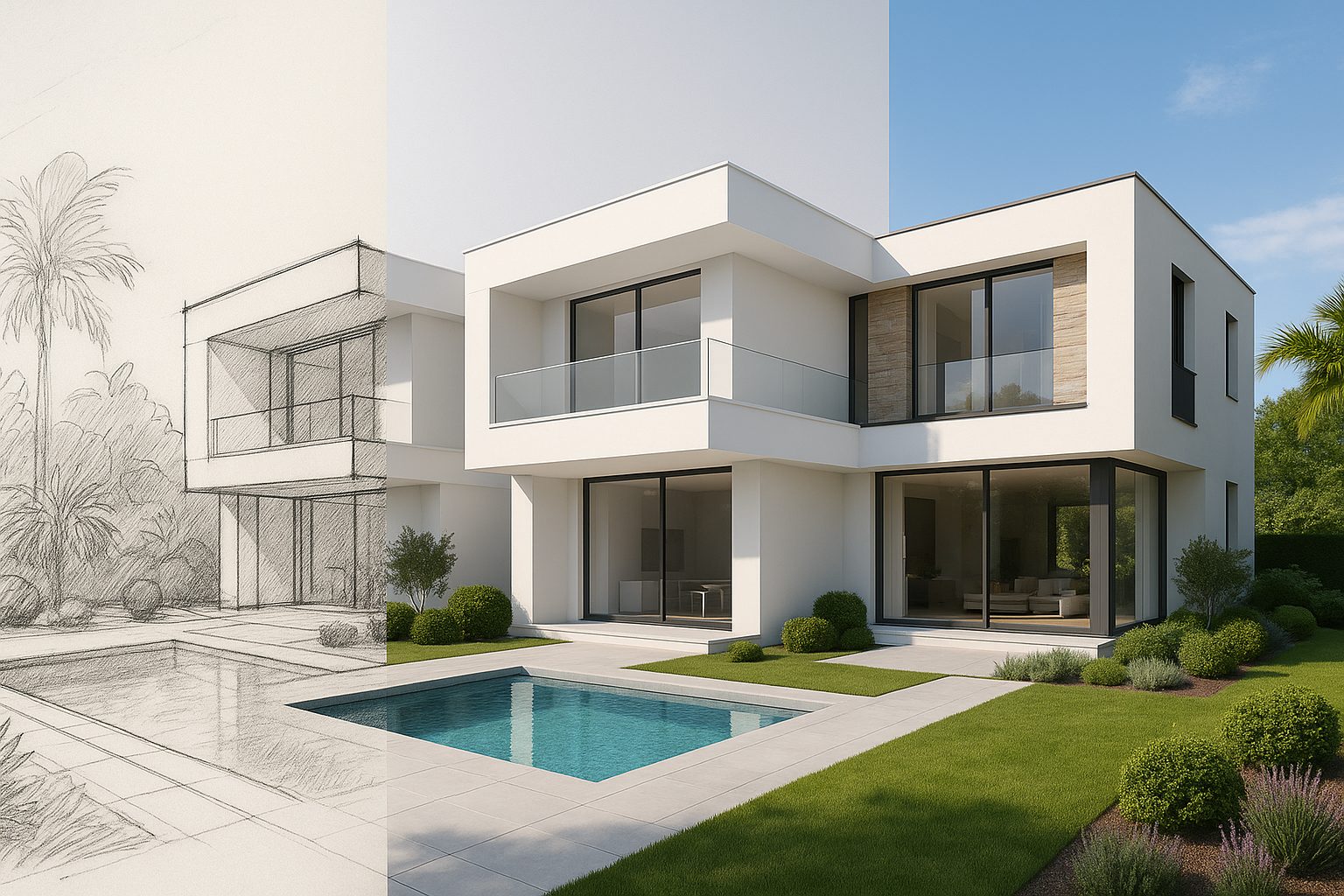


A villa is the most personal project most clients will ever commission, and it is also usually the least time-pressured. That combination changes how you should plan it: less like a fit-out with a hard opening date, more like a long collaboration that is worth doing properly the first time.
Design fees scale with customization, not just size
Villa design fees in Ho Chi Minh City typically start around 500,000 VND per square meter (roughly US$19) for a premium villa and rise past 1,500,000 VND per square meter (roughly US$58+) for a fully bespoke home built around custom furniture, art curation and landscape integration. Floor area matters less than most owners expect. A smaller villa with highly customized joinery, layered lighting and imported materials can cost more to design than a larger, simpler home, because the fee reflects the depth of the design process, not just the square meters it covers.

Timeline is measured in months, not weeks
Concept development typically takes 6 to 12 weeks for a villa, longer for a fully bespoke home. Technical drawings, material selection and cost finalization add another 4 to 8 weeks. Construction then generally runs 6 to 12 months depending on scale, with the most ambitious bespoke villas taking 1 to 2 years from first concept to final handover. Building in time for full-scale mock-ups of custom furniture before production begins is normal at this level, and it is far cheaper than discovering a proportion problem after the piece is built.

Build for Vietnam's climate, not a moodboard from somewhere else
A reference image from a cooler, drier climate rarely translates directly to Ho Chi Minh City. Natural ventilation, deep overhangs, indoor-outdoor connectivity and materials that age well in heat and humidity all need to be designed in from the start, not treated as adjustments later. The villas that still feel calm and comfortable five years after handover are the ones where climate was a design input from day one, not an afterthought.
Furniture and detailing usually decide whether it feels finished
The gap between a villa that looks like a rendering and one that feels genuinely lived-in almost always comes down to furniture and detailing: joinery tolerances, hardware quality, how materials meet at a corner. Because these decisions come late in the process, they are also the easiest to compromise on when a budget gets tight. Protecting a realistic allowance for furniture and finishing detail from the very first budget conversation, not just for walls and floors, is one of the simplest ways to avoid an unfinished-feeling result.